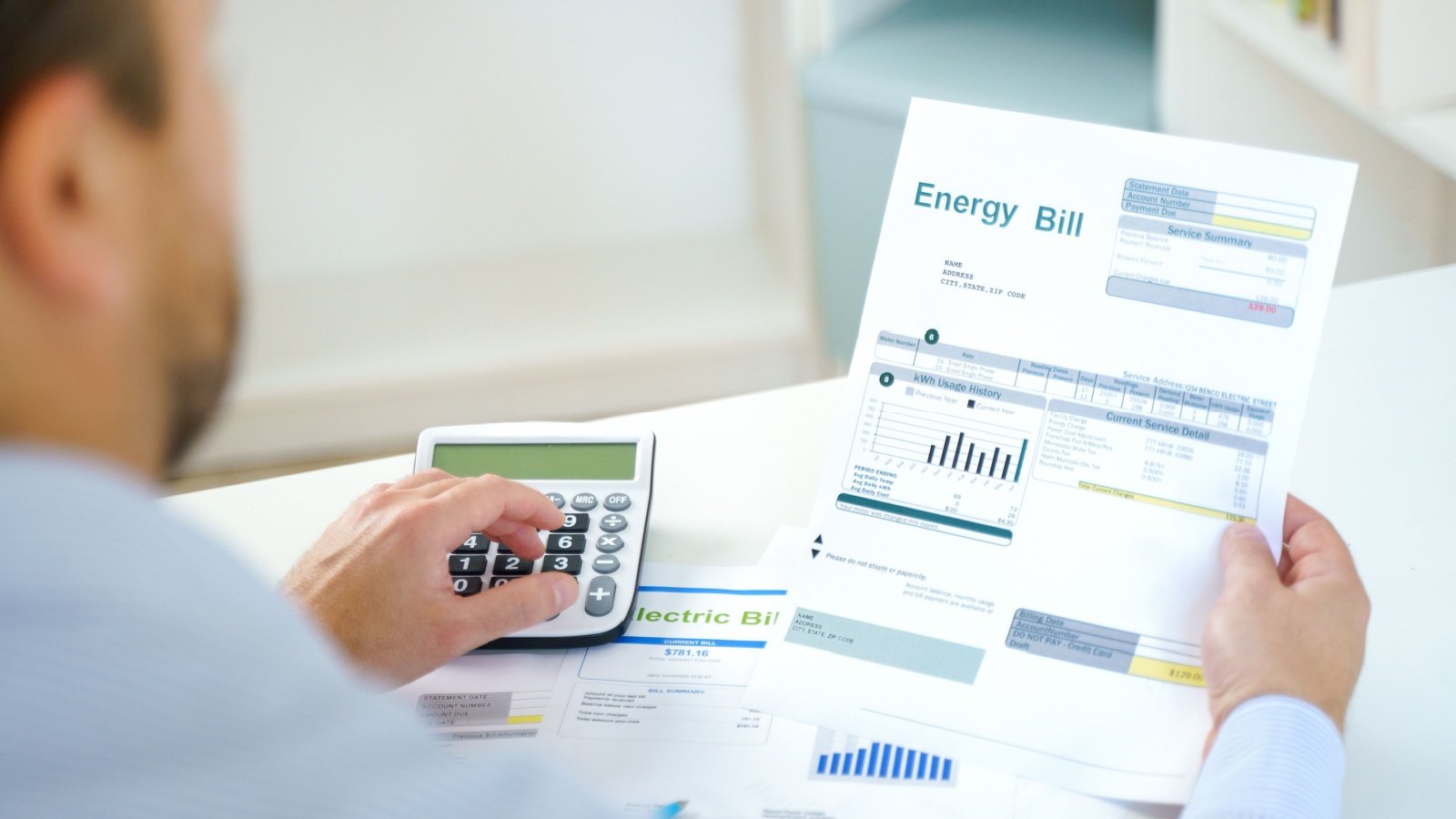
Open any electricity bill in Pakistan and you will notice something striking: the amount you pay for the electricity you actually used is often much smaller than the final total. The rest is made up of taxes, duties, surcharges and fixed charges layered on top of your energy cost. If you have ever wondered where your money really goes, this guide breaks down every tax and charge on a Pakistani electricity bill, line by line.
Why your bill is more than your units
Your bill has two main parts. The first is the energy charge — the cost of the units (kWh) you consumed, multiplied by the slab rate. The second part is everything else: government taxes, regulatory surcharges, the TV licence fee and fixed monthly charges. On a typical domestic bill, these extras can add 30 to 50 per cent on top of the energy charge. To follow along with your own bill, it helps to understand every section of the electricity bill first.
General Sales Tax (GST)
GST is the biggest single tax on your bill. It is charged as a percentage of the energy cost (plus, in most cases, the fixed charges and some surcharges), and it currently stands at 18 per cent for most residential consumers. This means nearly one-fifth of your energy cost goes straight to the national exchequer as sales tax. Commercial and industrial consumers may face additional withholding-style taxes on top of this, but for a household, GST is the headline tax.
Fuel Price Adjustment (FPA)
FPA is not strictly a tax, but it behaves like one on your bill — an extra per-unit charge that changes every month. It reflects the difference between the reference fuel cost built into the tariff and the actual cost of the fuel (oil, gas, LNG) used to generate electricity that month. When international fuel prices rise, FPA goes up; when they fall, it can even be negative. Because it is charged per unit, heavy users feel it most. We have a detailed explainer on FPA and how it is calculated.
PTV licence fee
Every electricity bill carries a flat PTV licence fee — a fixed monthly amount collected on behalf of Pakistan Television. It is the same whether you use 50 units or 500, and whether or not you own a television. For the full story on who pays it, how much it is and whether it can be removed, read our guide What Is the PTV Fee on Your Electricity Bill?.
Fixed charges
Fixed charges are a flat monthly amount that depends on your connection type — single-phase domestic connections pay a smaller fixed charge than three-phase connections. You pay this even if you consume zero units in a month, because it covers the cost of keeping you connected to the grid: the meter, the service line and network maintenance. If you have a three-phase meter running a heavy load, expect a noticeably higher fixed charge.
Surcharges
Surcharges are extra levies added by the government or regulator for specific purposes, such as financing power-sector debt or funding development projects. Unlike GST, they are usually flat per-unit amounts rather than percentages, and they change from time to time through government notifications. Because they sit inside the taxable base, you effectively pay GST on some surcharges too — one reason the total climbs faster than people expect.
Electricity duty
Electricity duty is a small provincial tax levied on energy consumption. It appears as a separate line and is calculated on the units consumed. The rate varies by province, but for most domestic consumers it is a modest amount compared with GST and FPA.
Extra tax and further tax
If you see “extra tax” or “further tax” on a bill, it usually relates to commercial connections or consumers not registered in the sales tax regime. Ordinary domestic households rarely face these, but small businesses running on a domestic meter sometimes get an unpleasant surprise when their connection is reclassified.
A worked example
Imagine a household that used 300 units in a month at an average energy rate of about Rs 30 per unit. The energy charge is roughly Rs 9,000. Add FPA of, say, Rs 3 per unit (Rs 900), fixed charges and surcharges of a few hundred rupees, then apply 18 per cent GST on the taxable base, plus the PTV fee and electricity duty — and the final bill easily crosses Rs 12,000. The extras added more than a third on top of the energy cost.
How to keep the tax burden down
- Use fewer units. Almost every tax scales with consumption, so cutting units cuts GST, FPA, duty and surcharges together. Our 12 proven tips to reduce your electricity bill are the best starting point.
- Stay in the protected category. Protected consumers (using under 200 units for six consecutive months) pay lower slab rates, which also shrinks the tax base. Read our protected vs unprotected consumer guide to see how it works.
- Estimate before the bill arrives. Plug your expected units into the bill estimator on our homepage so there are no surprises, and check your latest bill online the moment it is issued.
Taxes on electricity are unlikely to disappear, but understanding each line puts you back in control. When you know what GST, FPA, fixed charges and surcharges actually are, you can spot errors, plan your usage and keep the extras as low as legitimately possible.
Leave a Reply